
Bob Dylan, Mixing Up the Medicine (2023), the Bob Dylan Book Club-Book-of-the-Month for January 2026, was developed, written, and edited by Mark Davidson (Curator of the Bob Dylan Archive) and Parker Fishel (archivist with and founder of Americana Music Productions). It is a beautiful book, with 100s of pictures, many that are not in general circulation in the Dylan community. The written contributions include a Preface (Mark Davidson and Parker Fishel), an Introduction (Sean Wilentz), and Epilogue (Douglas Binkley) and essays from 27 Dylan scholars and enthusiasts, including an essay (Widescreen, page 378) by our own Bob Dylan Book Club member, Terry Gans. He will lead our discussion and holds the distinction of having published the first book, Surviving in a Ruthless World: Bob Dylan’s Journey to Infidels (2020), based on research in the Bob Dylan Archive.
LINKS to expand your exploration and appreciation of Mixing Up the Medicine:
Mitch Bradford’s 5 Suprising Things about Mixing Up the Medicine: 1. The book is HUGE, Dylan’s artistic output is large and diverse; 2. the PHOTOS are amazing and show how the image Bob projects changes over time; 3. the DRAFT LYRICS, often on hotel stationary during his tours, are astounding; 4. CONTRIBUTORS, of which there are many; 5. NOTES FROM OTHER ARTISTS to Bob Dylan), HERE.
Davidson and Fishel interviewed on Tickle Yourself, HERE.
Craig Danuloff of the FM Club interviewed Davidson and Fishel, HERE.
Harold Lepidus, host of the Boston Harold Video Podcast, gives a preview of the book, HERE.
Interview with Vish Khanna with Davidson and Fishel on Kreative Kontrol, HERE.
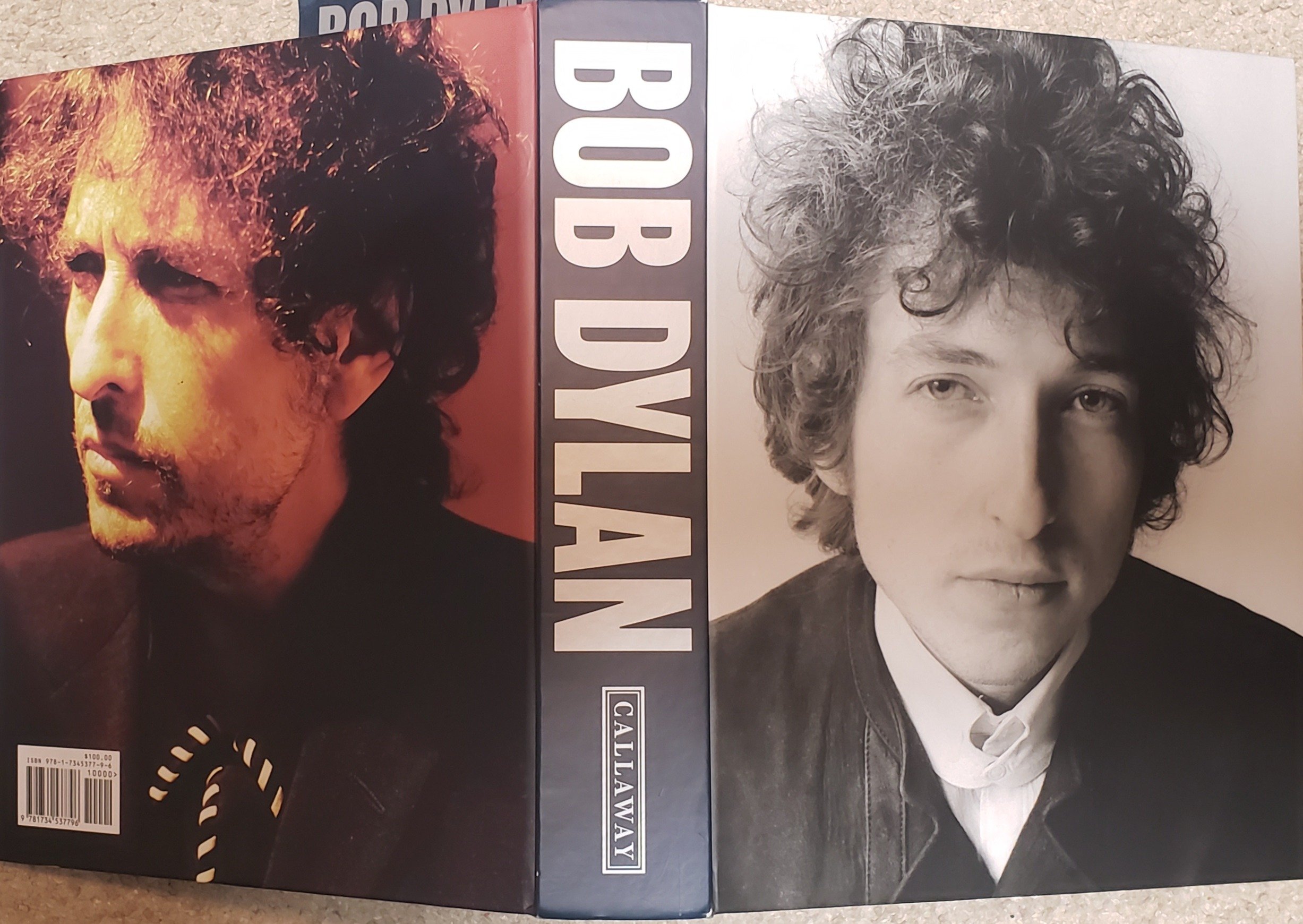
Mixing Up the Medicine is the first book to be published by the Bob Dylan Center. The project accomplishes two interwined objectives: First, it gives us an insider’s view of how rich and exciting the Bob Dylan Archive is. And, second, it gives us views of Mr. Dylan himself (more on this below).
The Archive includes “over 100,000 items”, comprising a “vast collection of unique materials”, including handwritten lyrics, typescripts, notebooks, unreleased recordings, photos, film footage, clothing, hats, and other personal effects. Though there must have been losses over the years, the amount that was saved, in Dylan’s own possessions and in the holdings of serious collectors, is astounding. These materials span the 6+ decades of Dylan’s career.
All this collecting and saving reflects how Dylan and his audience, from early on, knew something important was happening, that there was something special, different, and unique about this young man. There was a charisma and intensity. There was something about his wit, poetic lines, and commitment that set him apart. These special qualities came up in several of our Book Club discussions: Peter MacKenzie said you could see it in his eyes, Dave Van Ronk told his wife Terry Thal, soon after Dylan arrived in New York City and before he began writing his own songs, that he was a genius, and she noted that, even before he became famous, he had become the most photographed artist in Greenwich Village. I note again: there was something about him…
525 books! link to our own booklist
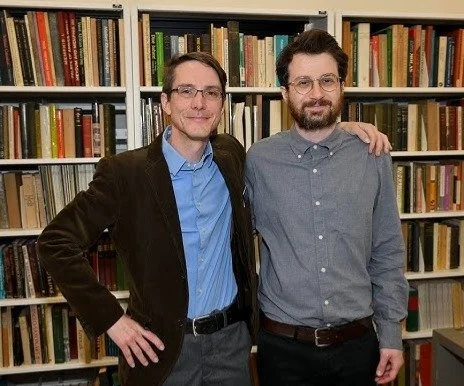
Mark Davidson (left) & Parker Fishel (right)
The second accomplishment of Mixing Up the Medicine: the book provides the reader with a structure and a set of landmarks in our quest to understand Dylan’s work and his creative processes. What do we learn about the artist at the center of this creative output? 1) Interconnectedness. Dylan is a keen observer—he accumulates diverse influences, resulting in a spiderweb of connections. 2) Restless searching. He is restless, he explores the possible roads ahead, he changes, so that the past is prelude (thus, there is no other way for Mixing Up the Medicine to be structured other than chronologically). He has times of disruptive boldness and times when he expresses uncertainty about where he is going (see link to Kreative Kontrol interview of Davidson and Fishel). 3) Brilliance and uniqueness. His poetics, wit, creativity, and his setting of his own rules establish him as brilliant and unique. 4. Commitment, purpose, and destiny. In the Ed Bradley interview on 60 Minutes, Bradley asks him “why do you still do it? why are you still out here? Dylan says “it goes back to that destiny thing” and that he is holding up his end of a bargain he made with “the Chief Commander”. 5) Live performance. While he writes, composes, recrods, draws, paints, and sculpts, live performance remains the central focus of his art—he is in the “now”, he connects directly to his audience, he seeks a moment of honesty in which his performance is heartfelt.
Those of us that are touched by Bob Dylan’s work become fascinated and can feel that it’s like watching a magic trick. How did he do that? Or it’s like a giant jigsaw puzzle. We move the pieces this way and that and rotate them, trying to complete a picture. Dylan, of course, wants the art to speak for itself, with no explanation. Nonethelss, as the Kreative Kontrol interview has noted, we anticipate, make wish-lists, and yearn for missing pieces. We have made Bob Dylan the most bootlegged artist. The Bob Dylan Archive gives us further hope in our search (see Terry Gans quest in his essay Widescreen in which he notes both AHA! and aha! moments).
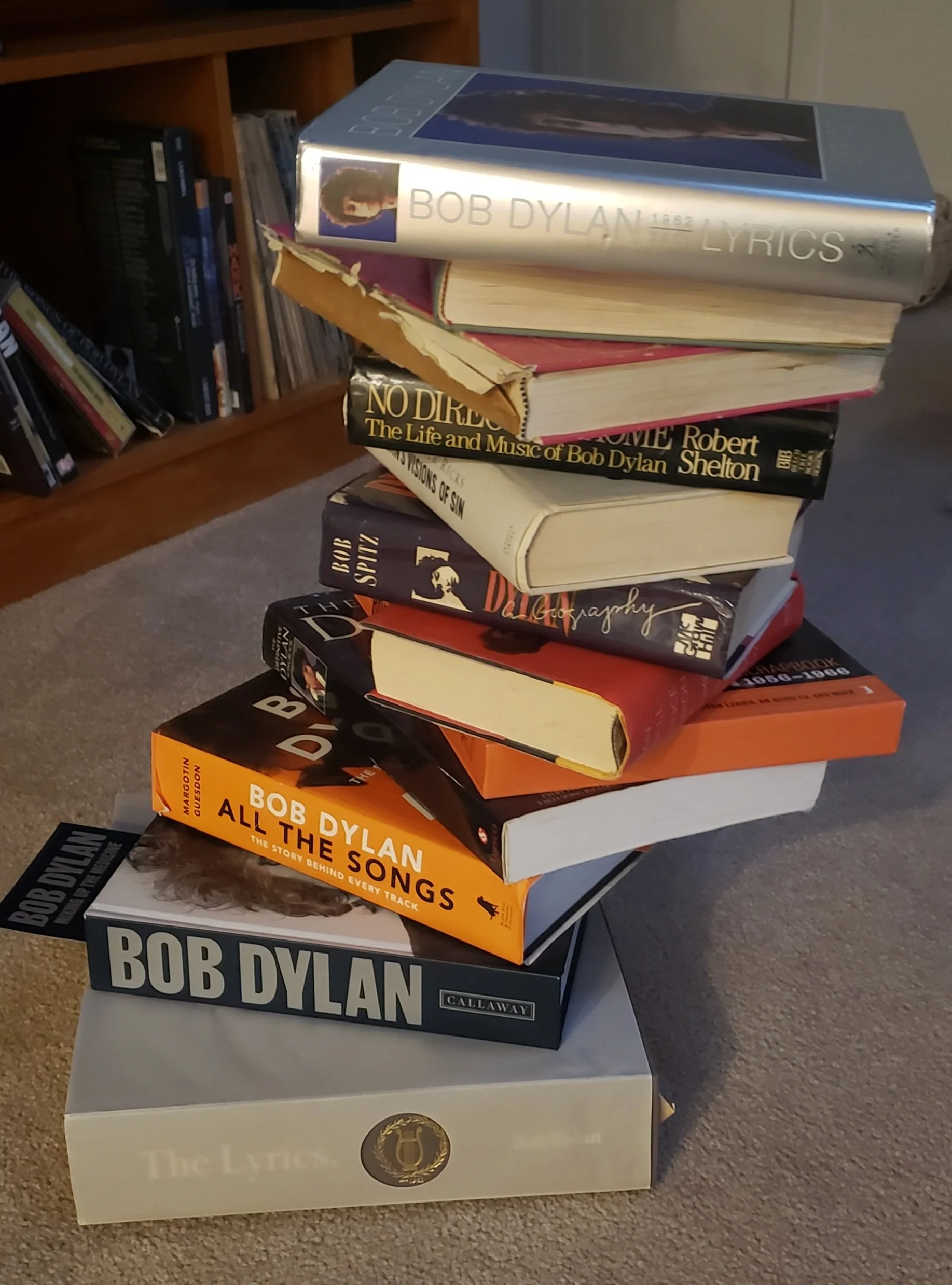
Above, right: Mixing Up the Medine is a BIG book: 608 pages and 4.4 lbs. Above is my precarious stack of the 12 largest Bob Dylan books I own (Mixing Up the Medicine is 2nd from the bottom).
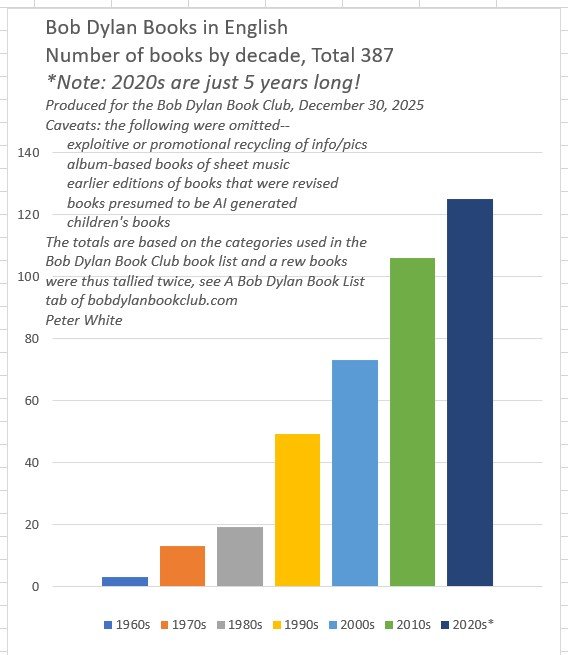
Left: While we are on the subject of the world of Bob Dylan books, here is a chart of the number of Bob Dylan books published in English by decade (note caveats on the graph). Use the “email us” buttom in the banner to submit comments. More than half the total number of books have been published in the last 15 years! This accumulating scholarship is a major reason the Bob Dylan Book Club exists! The Bob Dylan Book Club Book List currently has 387 titles. In 2026 books considered at our meetings will be nearing 10% of the full list. Good work, everyone! Keep it up.
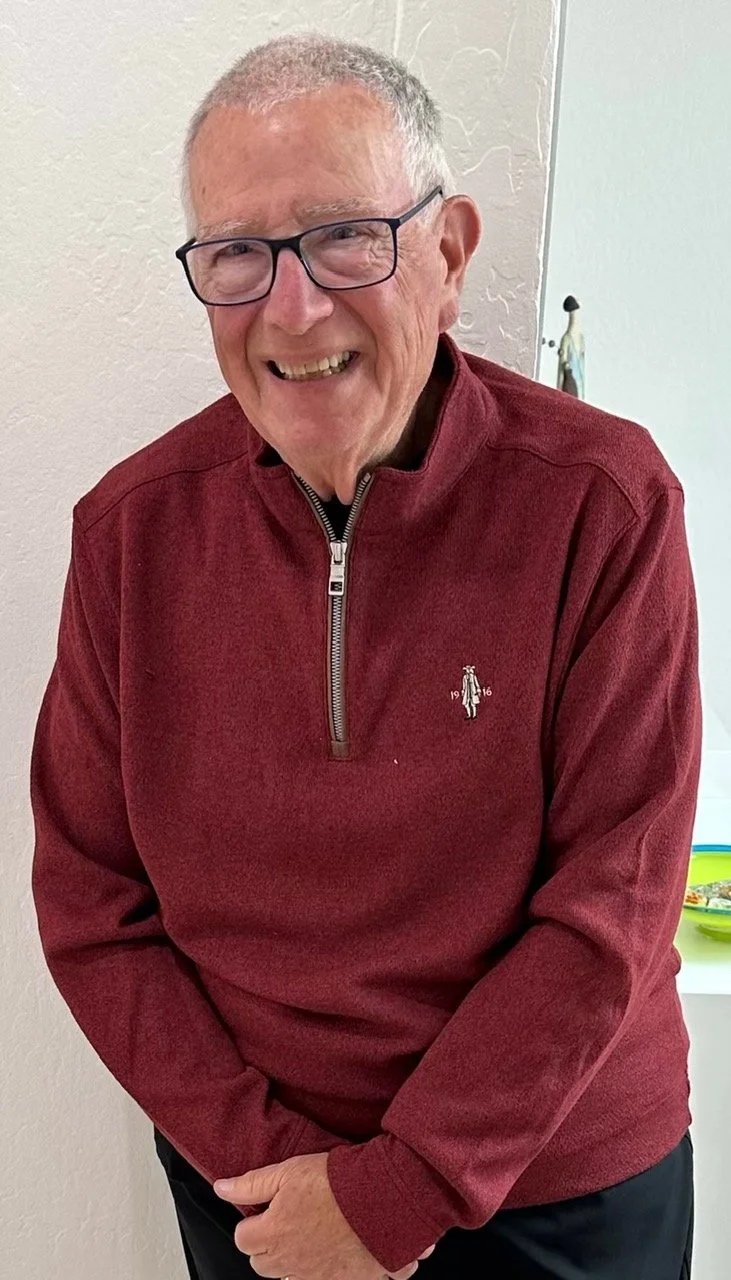
Terry Gans began listening to and learning about Bob Dylan in 1962. Beginning in the 1980s, he began writing about Dylan, including contributions in The Telegraph, Look Back, The Bridge, and ISIS magazine. He has written two books: his Master’s thesis at the Miami University (Ohio) was published as What’s Real and What Is Not and Surviving in a Ruthless World: Bob Dylan’s Voyage to Infidels, a book that has the distinction of being the first published book to make use of the Bob Dylan Archive. Beyond the Dylan world he has had an impressive diversity of roles: Mayor of Longboat Key, Florida; advertising executive, corporate controller, songwriter, grocer, advertizing executive, and journalist.
—Peter White, December 2026